

































Kitten opvoeden: zo groeit hij op tot een zelfverzekerde kat

De eerste maanden van een kittenleven bepalen voor een groot deel wat voor kat hij wordt: zelfverzekerd en sociaal, of schrikachtig en teruggetrokken. Het goede nieuws: opvoeden is bij kittens vooral goed begeleiden. In dit artikel de complete basis, van de eerste week in huis tot zindelijkheid en alleen leren zijn.
De socialisatiefase: de belangrijkste weken
De gevoeligste periode voor socialisatie ligt grotendeels bíj de fokker (de eerste levensweken); daarom is een goed nest zo belangrijk. Maar ook na de verhuizing naar jouw huis, meestal rond 8 tot 13 weken, leert een kitten razendsnel. Alles wat hij nu rustig en positief meemaakt (stofzuiger, bezoek, autoritje, andere dieren, geluiden) wordt later "gewoon". De regel: nieuwe dingen aanbieden in kleine porties, nooit forceren, en elke positieve ervaring belonen.
De eerste week in huis
- Begin klein. Geef het kitten één rustige kamer met eten, water, een slaapplek en de kattenbak. Pas als hij daar zelfverzekerd rondloopt, mag het huis stap voor stap open.
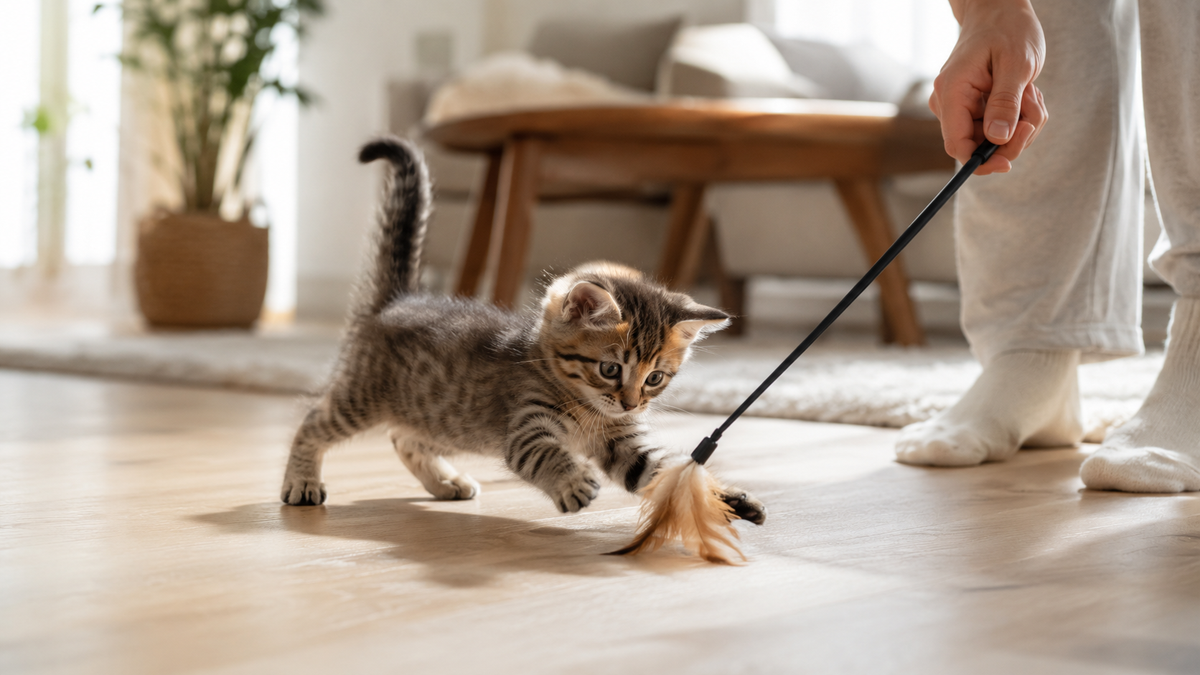
- Laat hem naar jóu komen. Zit op de grond, speel met een hengeltje, en laat het kitten het tempo bepalen.
- Houd het ritme van de fokker aan qua voer en voedermomenten, en schakel pas geleidelijk over op ander voer.
Spelen is leren (en dit is de belangrijkste regel)
Kittens leren jagen, doseren en remmen via spel. Eén regel voorkomt jaren aan problemen: speel nooit met je handen of voeten. Wat schattig is bij een kitten van 800 gram, is pijnlijk bij een kater van 5 kilo. Gebruik altijd een hengel, bal of ander speelgoed als "prooi". Bijt of krabt hij toch tijdens het spel: geluid maken ("au"), spel direct stoppen, even negeren. Zo leert hij dat te ruw spelen het spel beëindigt.

Plan meerdere korte speelsessies per dag (kittens hebben een korte spanningsboog) en sluit af met een "vangst": laat hem de prooi pakken, eventueel gevolgd door een snackje. Dat maakt de jachtcyclus af en geeft rust.
Zindelijk worden: makkelijker dan je denkt
Katten zijn van nature zindelijk; de meeste kittens hebben het bij de fokker al van hun moeder geleerd. Jouw taak is het makkelijk maken:
- Zet de bak op een rustige, altijd bereikbare plek (niet naast de wasmachine of het voer).
- Gebruik in het begin hetzelfde type vulling als bij de fokker.
- Houd de bak schoon; ook kittens mijden een vieze bak.
- Gaat het een keer mis: nooit straffen, wel de plek met enzymreiniger schoonmaken en kijken wat er aan de bak of de plek schort. Meer daarover in waarom plast mijn kat in huis.
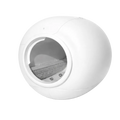
Goed om te weten voor wie een automatische kattenbak (wil) hebben: de gewichtssensoren van de Poopy Nova Pro herkennen katten vanaf 1 kilo, ongeveer 3 maanden oud. Vanaf dat moment kan een kitten er veilig gebruik van maken, en in de praktijk wennen kittens juist het snelst van iedereen: ze kennen geen oude gewoontes. Onze gewenningsgids loopt de stappen met je door.
Alleen leren zijn
Een kitten dat nooit alleen is geweest, wordt een kat die niet alleen kán zijn. Bouw het op: eerst minuten, dan een uur, dan een dagdeel. Maak van vertrek en thuiskomst geen feestje (rustig weggaan, rustig binnenkomen), dan leert hij dat alleen zijn normaal is. Hoe lang een volwassen kat uiteindelijk alleen kan zijn lees je in hoe lang kun je een kat alleen laten.
Dierenarts, vaccinaties en de basis
Plan kort na aankomst een kennismakingsbezoek bij de dierenarts. Die zet de lijnen uit voor vaccinaties (de eerste entingen gebeuren deels al bij de fokker), ontwormen (kittens vaker dan volwassen katten, zie ons artikel over wormen bij katten), chippen en het moment van castratie of sterilisatie. Zo'n eerste positief bezoek (snoepjes mee!) maakt alle latere bezoeken makkelijker.
Veelgestelde vragen over kittens opvoeden
Wanneer mag een kitten bij de moeder weg?
Wettelijk minimaal 7 weken, maar vrijwel alle experts adviseren 12 tot 16 weken: die extra weken bij moeder en nestgenoten zijn cruciaal voor sociale vaardigheden.
Mijn kitten bijt tijdens het spelen. Hoe stop ik dat?
Direct het spel stoppen bij elke beet, nooit met handen spelen, en zorgen voor voldoende "legale" prooien (hengels, speeltjes). Consequentie is alles: als bijten soms wél werkt, blijft hij het proberen.
Vanaf wanneer kan een kitten een automatische kattenbak gebruiken?
Vanaf ongeveer 1 kilo lichaamsgewicht (zo'n 3 maanden): dan herkennen de gewichtssensoren hem betrouwbaar en pauzeert de reiniging zodra hij op of in de bak stapt.
Hoe leer ik mijn kitten zijn naam?
Naam zeggen, direct belonen als hij reageert, herhalen op rustige momenten. Katten leren hun naam prima; ze beslissen alleen zelf wanneer reageren de moeite waard is.
Eerst meer weten over de kattenbak-basis? Lees onze complete gids over automatische kattenbakken.