
































Your cat suddenly starts peeing in the house—on the couch, in the hallway, or maybe even on your bed. And you’re right to wonder: why is he doing this? First, the good news: you’re not alone, and there’s always a solution. But to fix it, you first need to understand what’s behind it, because cats never do this for no reason and never out of revenge. In this article, we’ll walk you through all the possible causes step by step, from most likely to least likely.
Step 1: Rule out medical causes
Always start here, especially if the urination started suddenly. The most common medical causes are bladder infections, kidney problems, and diabetes; older cats are more susceptible to these conditions. Your cat can’t talk, but its behavior speaks volumes. Watch for these signs:
- Does he pee small amounts more often?
- Do you see blood in your urine?
- Does he seem to be in pain when he urinates (whining meows)?
- Is he suddenly drinking a lot more water than usual?
Do you recognize one or more of these signs? If so, contact your veterinarian right away—don’t wait: an untreated urinary tract infection or diabetes can quickly get worse. You can read more about urinary tract infections on the Anicura website, and about diabetes in our article on diabetes in cats.

Step 2: Is your cat urinating, or is it spraying?
Not every cat that pees in the house is actually urinating. Spraying is scent marking: small amounts of urine on vertical surfaces such as walls, doors, or the couch, with the cat standing upright and its tail twitching. Regular urination is done in a crouching position, on the floor.
Spraying is rarely a form of protest and is usually a stress response: cats use their scent to make sense of their environment. Think of changes in the home (moving boxes, a new baby, renovations), other cats inside or outside, a lack of safe hiding spots, or hormonal fluctuations, such as when a female cat is in heat. In unneutered male cats, spraying is the most persistent; neutering significantly reduces this behavior in most cases. Furthermore, the rule is: identify the source of stress, remove it, and the spraying will usually stop.

Step 3: Take a critical look at the litter box
If your cat is healthy and isn't spraying, the litter box itself is by far the most common cause. Cats are extremely clean animals: if the litter box isn't clean, safe, or comfortable, they'll look for a better spot—and that spot will be your floor. Check the following:
- Is the litter box clean enough? This is the number one cause. What still seems acceptable to us is already way past the limit for a cat’s nose.
- Is the container in a quiet spot? Not next to the washing machine, not in a drafty hallway, not next to food and drinks.
- Enough litter boxes? The rule of thumb for regular litter boxes: one litter box per cat, plus one extra. An automatic litter box that cleans itself after each use changes that equation: up to 3 cats can comfortably share one litter box.
- Is the litter box big enough? Larger cats, in particular, tend to avoid a cramped litter box.
- Has the food been changed recently? Cats are attached to the smell and texture; make the switch gradually by mixing the new food in with the old.
A clean car, always
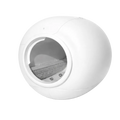
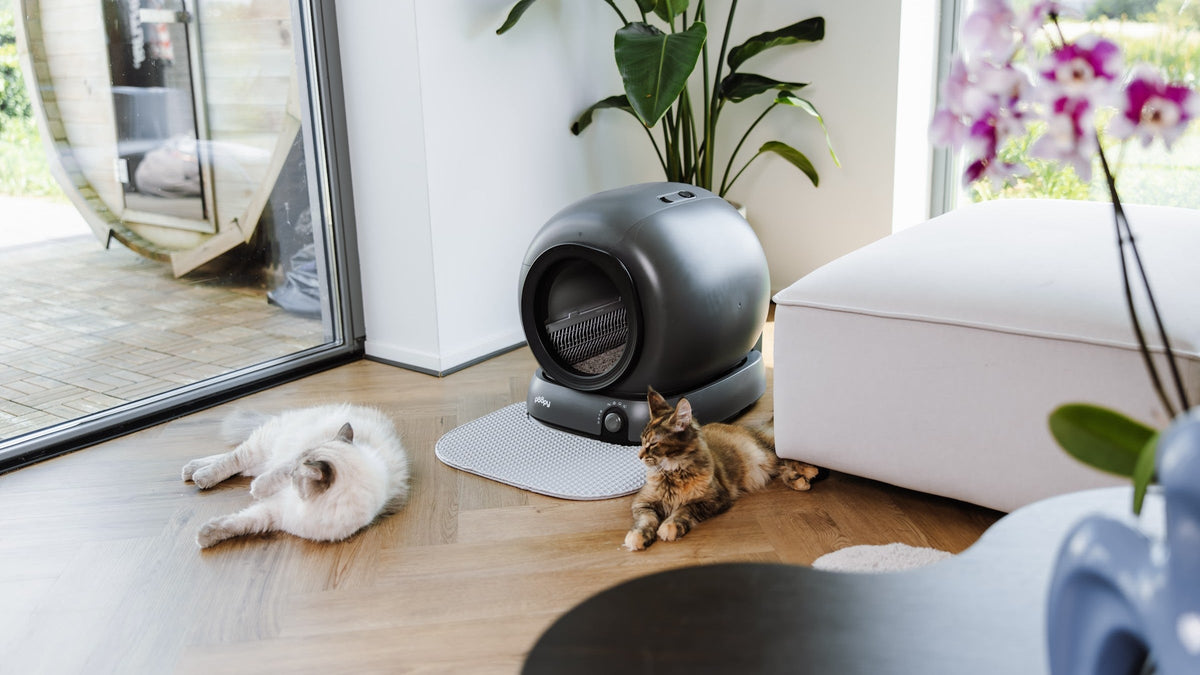
Cats are naturally clean: a dirty litter box is one of the main reasons they’ll pee outside of it. An automatic litter box like the Poopy Nova Pro cleans itself after every use, so the litter box always stays inviting, even when you’re not home. With a 50-day free trial, you can try it out risk-free.
Step 4: Clean up thoroughly and never punish
Two things determine whether the problem will recur. First: clean up urine spots with an enzyme cleaner. Regular cleaning products only mask the odor to your nose; to your cat, the spot will still smell like a litter box and thus encourage the behavior to repeat. Second: never punish your cat for an accident. Your cat won’t associate the punishment with urinating but with you, and the added stress usually makes the behavior worse.
In a nutshell
- Medical: bladder infection, diabetes, or kidney problems; if your pet exhibits sudden behavioral changes, always consult your veterinarian first.
- Spraying: scent marking caused by stress or hormones; remove the source of stress; neutering helps with male cats.
- The container: too dirty, too small, in the wrong place, or not enough of them; the checklist above solves most of these issues.
- Clean up and be patient: use an enzyme cleaner, never punish, and address the root cause.
And remember: every cat is unique. The most important thing is to find the cause; often, the solution is simpler than you think.
Frequently asked questions
Why is my cat suddenly peeing in the house?
A sudden change in urination habits is often a sign of a medical condition (most commonly a bladder infection). First, have your veterinarian rule that out, and then check the litter box, the area, and any recent changes in your home.
Why does my cat pee on my bed or on the couch?
In fact, places that strongly smell like you are especially appealing to insecure cats: they mix their scent with yours to feel safer. So it’s usually stress or insecurity, not revenge. Ruling out medical causes is still the first step.
How do I stop water from spraying inside my house?
Identify the source of stress (a new cat in the neighborhood, a change in the home) and eliminate it; provide your cat with safe, elevated spots; and have unneutered male cats neutered. Clean up urine-soiled areas with an enzyme cleaner.
My cat also poops next to the litter box—is that the same thing?
The causes overlap (a dirty litter box being the main one), but there are specific things to keep in mind when it comes to defecation. For more information, read our article “Cat Poops Outside the Litter Box.”
Want to read more about cats and their behavior? Check out the Poopy or our complete guide to automatic litter boxes.