


































Krolse kat: hoe lang duurt het en wat helpt echt?

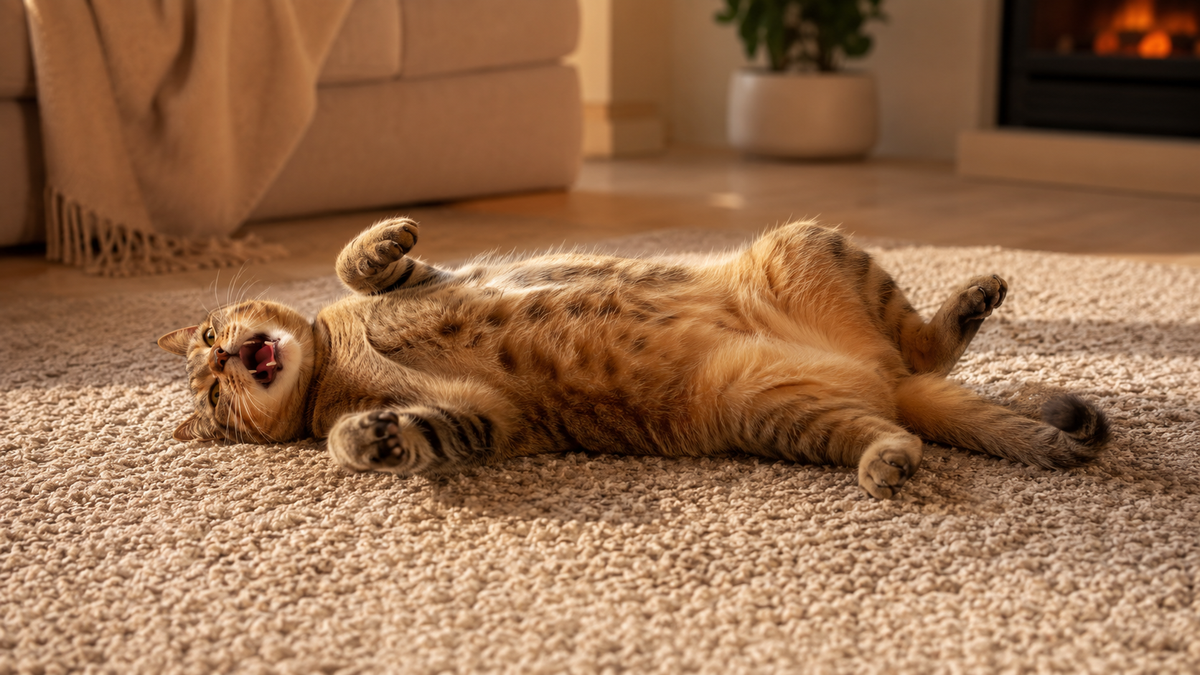
Je poes rolt over de grond, miauwt met een stem die je nog nooit hebt gehoord, steekt haar achterwerk omhoog en is nérgens meer weg te slaan bij deuren en ramen. Grote kans dat ze krols is. Vervelend voor haar én voor jou, maar goed te begrijpen en definitief op te lossen. Dit artikel legt uit wat er gebeurt, hoe lang het duurt en wat je eraan doet.
Wat is krolsheid precies?
Krolsheid is de vruchtbare periode van een ongesteriliseerde poes: haar lichaam staat klaar voor een dekking en al haar gedrag is daarop gericht. Poezen worden voor het eerst krols rond de 6 tot 9 maanden (bij sommige rassen eerder of later) en zijn seizoensgebonden vruchtbaar: vooral van late winter tot in de herfst, aangestuurd door daglicht.
Zo herken je een krolse poes
- Luid, aanhoudend roepen (soms dag en nacht), alsof ze pijn heeft
- Rollen over de grond, kopjes geven tegen álles, extreem aanhankelijk
- De paarhouding: voorlijf laag, achterwerk omhoog, staart opzij
- Naar buiten willen, bij deuren en ramen hangen
- Soms: sproeien of plassen buiten de bak (urine verspreidt haar "advertentie")
- Minder eetlust
Belangrijk om te weten: krolsheid is géén ziekte en het luide roepen betekent geen pijn, maar het ís stressvol voor de poes, zeker als het cyclus na cyclus doorgaat zonder dekking.

Hoe lang duurt krolsheid?
Een krolse periode duurt gemiddeld zéén dagen. Wordt de poes niet gedekt, dan keert de krolsheid in het seizoen elke twee tot drie weken terug. Praktisch betekent dat: zonder ingrijpen ben je een groot deel van het jaar om de paar weken een week "aan de beurt". Sommige poezen raken zelfs in een vrijwel doorlopende krolsheid.
De echte oplossing: steriliseren
Er is één structurele oplossing: sterilisatie (het verwijderen van de eierstokken). Dat stopt de krolsheid definitief, voorkomt ongewenste nestjes én heeft gezondheidsvoordelen: het risico op melkkliertumoren en baarmoederontsteking daalt aanzienlijk. De meeste dierenartsen adviseren steriliseren rónd of vóór de eerste krolsheid; overleg met je eigen dierenarts over het beste moment voor jouw poes. Een poes hoeft, anders dan het hardnekkige fabeltje zegt, niet eerst een nestje te hebben gehad.
Wat helpt tijdens een krolse periode?
- Houd haar binnen. Eén ontsnapping is genoeg voor een nestje; katers ruiken haar van ver.
- Geef afleiding. Extra speelsessies verbranden de rusteloze energie.
- Blijf rustig en straf niet. Ze kan er niks aan doen; het is hormonaal gedrag.
- Houd de kattenbak extra schoon. Krolse poezen markeren soms met urine; een brandschone bak verkleint de kans dat het náást de bak gebeurt. Plast ze toch in huis, lees dan waarom plast mijn kat in huis voor de aanpak (enzymreiniger, nooit straffen).
- Warmtekussen of extra aandacht helpt sommige poezen zichtbaar te ontspannen.
En krolse katers?
Katers worden technisch gezien niet krols, maar reageren wél op krolse poezen in de buurt: zwerven, vechten, sproeien met sterk ruikende urine en luid roepen. Castratie lost dit bij katers grotendeels op en voorkomt bovendien zwerf- en vechtgedrag (en de bijbehorende dierenartsrekeningen).
Veelgestelde vragen over krolsheid
Heeft een krolse kat pijn?
Nee, het dramatische geroep klinkt als pijn maar is een paarroep. Wel is aanhoudende krolsheid zonder dekking stressvol en vermoeiend voor de poes.
Kan een gesteriliseerde poes nog krols worden?
Normaal niet. Gebeurt het toch, dan kan er een restje eierstokweefsel actief zijn; dat is een geval voor de dierenarts.
Vanaf welke leeftijd kan een poes gesteriliseerd worden?
Vaak al vanaf enkele maanden oud; veel dierenartsen plannen het vóór de eerste krolsheid. Overleg het moment met je eigen praktijk.
Mijn krolse poes plast opeens naast de bak. Wat nu?
Hormonaal markeergedrag komt voor tijdens krolsheid. Maak plekken schoon met enzymreiniger, houd de bak brandschoon en weet: na sterilisatie verdwijnt dit gedrag vrijwel altijd. Blijft het daarna bestaan, lees dan onze plas-gids of overleg met de dierenarts.
Een bak die áltijd schoon is scheelt tijdens zo'n hormonale week net dat beetje extra: lees hoe dat werkt in onze complete gids over automatische kattenbakken.