


































Bengal Cat: Banned in the Netherlands? Personality, Price, and Rules

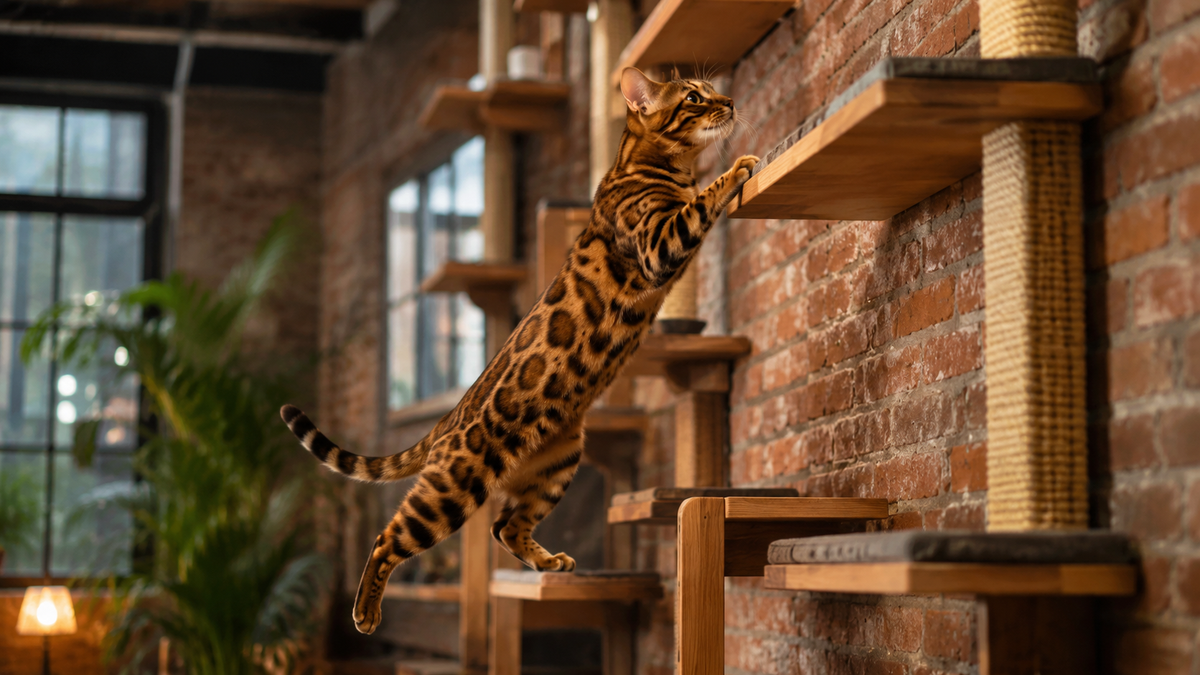
Bengal cat
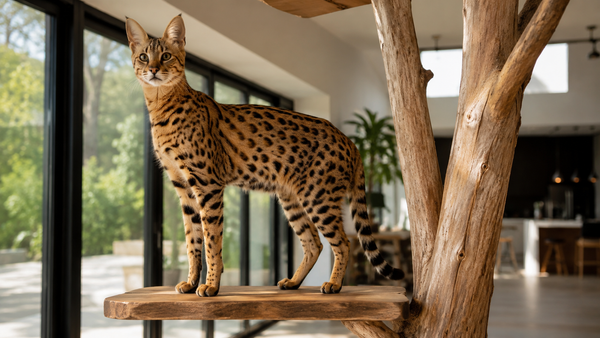
Is the Bengal cat actually suitable as a house cat? It’s a question you often hear, especially now that this striking breed is becoming increasingly popular in the Netherlands. What many people don’t know: the Bengal is no ordinary cat. It originated in the 1950s in the United States, from a daring cross between a domestic cat and the wild Asian Bengal cat—a small leopard-like feline. The result? A rare hybrid cat with an energetic personality, an athletic build, and a coat that resembles that of a mini cheetah.
But those wild roots also have legal consequences. As of July 1, 2024, all F1 through F4 Bengals (the first four generations after crossbreeding with a wild cat) will be officially banned in the Netherlands. These are included on the list of banned cat breeds. Only F5 Bengals and beyond are considered fully domesticated house cats and are still permitted as pets. Similar rules apply in Belgium.
| Feature | Description |
|---|---|
| Provenance | United States |
| Origin | Cross between domestic cat and Asian leopard cat |
| Temperament | Curious, playful, independent, active |
| Acknowledgment | TICA standard since 1983 |
| Special | Loves water - unique coat with leopard print |
Have you become curious about this unique Bengal, despite its wild origins? In the next paragraph, you’ll learn where you can buy a healthy, legally bred Bengal cat—and what you really need to look out for.
Buying a Bengal? This you really need to know
Anyone considering buying a Bengal cat should be well prepared. These cats are beautiful, rare, and popular—but they’re also feisty and expensive. You usually buy a Bengal kitten from a certified Bengal cattery. Make sure the kitten is an F5 or later generation: only those are legal and suitable as pet cats. A reputable breeder will always provide a pedigree, vaccination record, and contract.
The price of a Bengal cat ranges on average from €1,000 to €1,800, depending on color, pattern, and pedigree. A white Bengal or snow Bengal is often more expensive because of its unique coat pattern. Don’t forget about additional costs: food, toys, insurance, and—if you really don’t feel like scooping the litter box every day—a self-cleaning litter box like the Poopy Nova Pro. It saves you a ton of time and keeps your home fresh. This is especially handy for active breeds like the Bengal, which use their litter box more often. Want to know more?
Be careful when buying a kitten. Young Bengals are often especially energetic and unpredictable. They grow into muscular, large cats with a leopard-like appearance. So make sure your home is set up for this: climbing opportunities, sturdy furniture, and—above all—plenty of mental stimulation are a must. Are you thinking, “Yes, I want a kitten that’s truly unique?” Then the Bengal might just be your perfect match—as long as you know what you’re getting into.

Why the Bengal is a special pet
The Bengal cat is anything but ordinary. The first thing you notice, of course, is its appearance: a large, muscular cat with a wild look. It’s no wonder they’re often called leopard cats. The Bengal owes this nickname to its unique coat pattern—ranging from rosettes and marbling to solid spots—which closely resembles that of its ancestor, the Asian Bengal tiger cat.
There are various colors and patterns within the breed. For example, there’s the classic golden-brown Bengal, but also the rarer white Bengal or snow Bengal, whose coat is lighter and whose patterns are more subtle. The rosettes are often two-toned: dark on the outside, warm and golden on the inside. Combine that with their athletic build, and they’re sure to stand out.
And then there’s their personality. A Bengal cat is anything but a lap cat. They’re extremely curious, love to climb, play, and… water. Yes, really—most Bengals are crazy about water droplets, fountains, and even the faucet. That’s why it’s a good idea to secure water sources securely and clean up after them promptly. They’re intelligent and social, but that also makes them intense: a Bengal gets bored easily. If you don’t give them a challenge, they may exhibit destructive behavior or unwanted dominant behavior.
Are Bengals aggressive? Not necessarily—but they do have a strong will of their own. They often get along well with children if they’re given time to get used to them calmly, but they can react fiercely to unexpected stimuli or clumsy handling. Their training and socialization play a major role in this. That’s why they aren’t suitable for everyone. But those who understand them will be rewarded with an energetic and loyal companion.
Health and care of the Bengal cat
Although the Bengal cat looks strong and wild, that unfortunately does not mean it is immune to health problems. On the contrary: precisely because it is a hybrid breed, a number of hereditary conditions occur relatively frequently in Bengals. These include hypertrophic cardiomyopathy (HCM), a heart condition that is difficult to detect without specialized testing. Muscle disorders such as congenital myopathy can occur at a young age—sometimes with serious consequences.
In addition, it is known that the Bengal is predisposed to feline atopy, a form of allergy that can cause skin problems, and to Malassezia dermatitis, a yeast infection of the skin. This means that careful monitoring of the coat and skin is essential. Regular visits to the veterinarian and a reputable cattery that tests for hereditary diseases are therefore not a luxury, but a necessity.
In terms of grooming, the Bengal is relatively low-maintenance. Its short, dense coat sheds very little and doesn’t require extensive brushing. However, it’s important to check the coat weekly for irritations, mats, or parasites, especially if your cat goes outside. Because of their love of water, it’s also possible—with a little getting used to—to bathe a Bengal occasionally, which can help with skin problems.

Adopting a Bengal cat: smart idea or risk?
You might not expect it, but even a Bengal cat sometimes ends up in a shelter or is offered for adoption through specialized rescue organizations. That sounds appealing—a unique breed without the price tag of a kitten—but be careful. An adult Bengal has often already developed a strong personality, including potential behavioral issues such as aggression or territorial behavior, especially if it hasn’t been properly socialized.
So when adopting, it is crucial to ask carefully why the cat is being rehomed, and whether it is used to other pets or children. If you have no experience with active or independent cats, then an adult Bengal is not the easiest choice.
Still, there are some positives. Bengals are extremely intelligent, quick to train using clicker training, and learn routines remarkably fast. Many owners notice that their Bengal, for example, opens doors, initiates play on its own, or uses the litter box exactly as it should. Provided you have enough time, space, and patience, even an adopted Bengal can grow into an affectionate and loyal pet.
In short: with the right preparation and expectations, a Bengal can enrich your life even as an adoptable cat. Still, I will state it again: it is not a cat for everyone!
Welke kattenbak past bij een Bengaalse kat?
Het korte antwoord: een ruime, stevige bak, een mat tegen gestrooid grit en altijd schoon. Dat zit zo:
- Kies ruim en stevig. De Bengaal is een gespierde, grote en energieke kat die flink graaft. Een krappe of lichte bak beweegt mee of raakt snel overhoop, dus je wilt iets dat ruim is en stevig op zijn plek blijft staan.
- Leg er een mat bij. Omdat de Bengaal zo fanatiek graaft, vliegt het grit al snel over de rand. Een gritmat onder en rond de bak vangt dat op en scheelt je een hoop vegen.
- Houd hem schoon, altijd. Dit is een kat die gesteld is op een schone bak en daar gevoelig voor is. Een bak die niet elke dag geschept wordt gaat ruiken, en een vieze bak wordt gemeden.
Die eisen samen verklaren waarom veel baasjes van actieve rassen uitkomen bij een automatische kattenbak: die houdt de bak na elk bezoek schoon, zonder dat jij dagelijks hoeft te scheppen. De Poopy Nova Pro heeft een ruime, stevige trommel (geschikt voor katten van 1 tot 10 kilo, huishoudens tot 3 katten), pauzeert de reiniging zodra je kat op of in de bak stapt en sluit geurtjes luchtdicht op in het afvalcompartiment. En met 50 dagen proefpoepen ontdek je zonder risico of het bij jouw Bengaal past: went het niet, dan krijg je je geld terug.
Eerst meer weten over hoe zo'n bak werkt, wat hij kost en waar je op let? Lees onze complete gids over automatische kattenbakken. En juist bij zo'n fanatieke graver loont de vulling: sterke klonten en weinig sleepkorrels schelen je dagelijks vegen. Hoe je kiest lees je in de kattenbakvulling-keuzegids.
Want to read more?