



















Norwegian Forest Cat: Personality, Size, and How It Differs from the Maine Coon

A tough cat with a soft side
The Norwegian Forest Cat is an impressive breed from cold Scandinavia. This robust cat has survived for centuries in the rugged Norwegian forests and has become one of the oldest and most natural cat breeds in Europe. With its thick winter coat, muscular build, and climbing instinct, it may not seem like a typical house cat at first glance—but appearances can be deceiving.
It is precisely this combination of primal strength and affection makes the Norwegian Forest Cat increasingly popular in Dutch households. He is independent, intelligent and loves freedom, but at the same time gentle and loyal to his owner. A cat that loves to go outside, but is just as likely to drop onto the couch for a cuddle session.
Thanks to its imposing appearance, winter-resistant coat and surprisingly social nature, this breed is ideal for people looking for an active but stable housemate - as long as you know what you're getting into. Because this cat requires just a little more space, challenge and care than average.
Are you curious if the Norwegian Forest Cat will fit into your life? Then it is wise to first look at the costs and what you all need to responsibly take this breed into your home.
What does a Norwegian Forest Cat cost? And what do you need to know about purchasing?
The Norwegian Forest Cat is a unique breed—and it comes with a price tag to match. For a kitten from a certified breeder, you’ll pay an average of between €850 and €1,400. The exact price depends on the pedigree, health tests, socialization, and whether the cat is suitable for shows or just as a pet.
Be cautious of offers far below market price. Cheap kittens often come from unauthorized breeders or bread breeders, where health care, nutrition and socialization are skimped on. This can lead to behavioral problems or expensive vet visits later.
In addition to the purchase cost, you should consider fixed monthly costs, such as:
- High quality nutrition (€25-40 per month)
- Cat litter and grooming products (€15-25)
- Veterinarian/insurance (€15-30)
-
Toys, scratching posts and enrichment (one-time and recurring costs)
A good breeder shows that both parent animals have been tested for hereditary diseases such as HCM (heart disease), PKD (kidney disease) and other breed-specific problems. The kittens are microchipped, dewormed, vaccinated and grow up in a home environment.
Want to make sure you come to a reliable breeder?
Check out a licensed Norwegian Forest Cat cattery here!
Want to know more about the breed from nutrition experts and breed description?
Then take a look at the informative page of:
Royal Canin
Big, muscular and impressive!
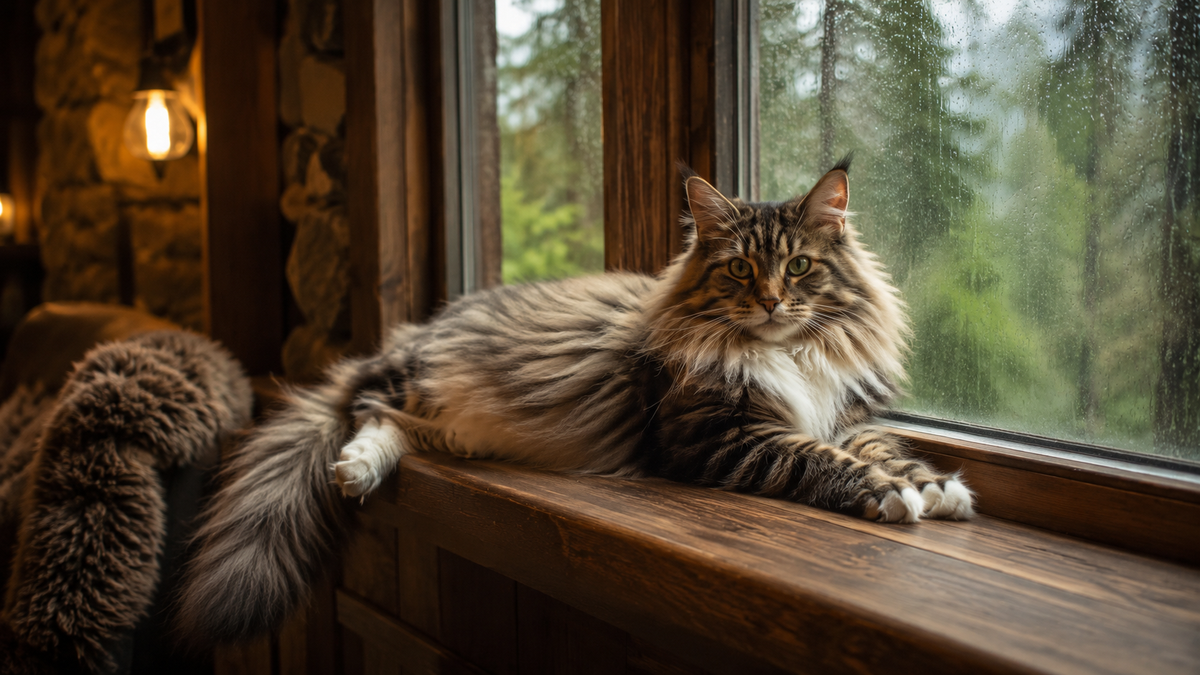
The Norwegian Forest Cat is not a cat you can easily overlook. Everything about this breed exudes robustness: from its broad chest to its thick, bushy tail that curls around its body like a winter coat. This is not a show cat, but a naturally developed breed that has managed to survive for centuries in the harsh Scandinavian climate.
Built for the North
This cat was literally designed by nature. He has strong bones, a muscular torso and long paws with tufts between the toes - ideal for snow and rough terrain. Adult males weigh on average between 5 and 9 pounds, females between 4 and 7 kilos. And with a body length of up to 1 meter can reach (including tail), it is among the largest domestic cat breeds in the world.
The iconic coat
What perhaps typifies the Norwegian Forest Cat the most is its double coat. It consists of a dense, insulating undercoat and a water-repellent outer coat. Striking is the full collar around the neck - often compared to a lion's mane - which becomes extra thick in winter. In summer, it loses some of its fur, which then makes it look sleeker and smoother.
The plumed tail, feathered legs and firm muzzle make it not only practically resistant to cold but also visually impressive.
Colors and variations
The Norwegian Forest Cat comes in almost every color imaginable, except point colors (as in Siamese or Ragdolls). From classic brown tabby to cream, blue, red and even white. One of the most striking variations is the black Norwegian Forest Cat - mysterious, powerful and rare. Tortoiseshell or silver coats are also popular among fanciers.
Coat care: easier than you think!
Although the coat looks impressive, it requires less maintenance than you might expect. Its texture ensures that tangles do not form easily. Brushing once a week is usually sufficient - although in the moulting or winter time, some extra attention can't hurt.

Character Norwegian Forest Cat
The Norwegian Forest Cat has a character that perfectly matches its appearance: powerful, independent and natural - but with a surprisingly gentle side. It is a cat that likes to go its own way, but at the same time can be tremendously social with its family. They are intelligent, curious and love heights, climbing and the outdoors.
Contrary to what you might expect with such a "wild" appearance, the Norwegian Forest Cat is actually good with children, other cats and even dogs. They have a calm energy, are rarely intrusive, but do like to lay with you when the time comes.
Norwegian Forest Cat and Maine Coon differences
Are you hesitating between a Maine coon or a Norwegian Forest Cat? Because the Norwegian Forest Cat is so often compared to the Maine Coon, it is good to take a moment to list the main differences.
-
The Norwegian Forest Cat has a triangular head with almond-shaped eyes, while the Maine Coon on the contrary, has a square head head with larger, rounder eyes.
-
Also, the Maine Coon is usually a little larger and more muscular than the Norwegian Forest Cat.
-
In terms of character, they are close to each other, although the Maine Coon is often said to be slightly more affectionate, while the Norwegian Forest Cat is slightly more independent.
Do you want to be able to properly compare both breeds? Read is our extensive blog on the Maine coon and list the differences for yourself!
Maine coon
How old does a Norwegian Forest Cat get? And what diseases are common?
A Norwegian Forest Cat lives, on average, between 14 and 16 years old, provided it is well cared for. Some cats even live to be 18 years old, especially if they are indoor cats, are fed high-quality food, and receive regular medical checkups.
Although the breed is known to be strong and naturally built, there are some hereditary disorders that you need to be alert to as an owner:
-
HCM (Hypertrophic Cardiomyopathy).: an inherited heart disease that thickens the heart muscle and impairs pumping function.
-
PKD (Polycystic Kidney Disease).: a condition in which fluid-filled cysts form in the kidneys.
-
Hip dysplasia and joint problems.: especially in older or overweight cats.
-
Obesity: Due to their quiet nature, Norwegian Forest Cats can quickly become overweight, especially if they do not get enough exercise.
Here's how to keep your Norwegian Forest Cat healthy:
-
Choose foods with proper nutrients and portion control
-
Encourage movement with climbing furniture, play tunnels and interactive toys
-
Have your cat checked regularly at the vet
-
Provide a quiet, stable living environment
Tip from Poopy: Do you oftenleave your cat home alone?
Norwegian Forest Cats can usually handle this just fine, but only under the right conditions. Stress, boredom, or accidents can happen more easily than you think.
Leaving Your Cat Alone
Welke kattenbak past bij een Noorse Boskat?
Het korte antwoord: een ruime, stevige bak die stabiel staat en altijd schoon is. Dat zit zo:
- Kies royaal formaat. De Noorse Boskat is een van de grootste huiskatten: katers wegen 5 tot 9 kilo en worden inclusief staart tot een meter lang. In een krappe bak kan zo'n kat niet fatsoenlijk draaien, en dan volgt vaak ernaast plassen of de bak mijden.
- Ga voor een stevige, stabiele bak. Dit is een gespierde, actieve klimmer. Een lichte of wankele bak die meebeweegt schrikt zo'n kat af, dus je wilt iets dat stevig op zijn plek blijft staan.
- Houd hem schoon, altijd. Noorse Boskatten hebben een sterk schoonmaakinstinct en mijden een vieze bak. Een bak die niet elke dag geschept wordt gaat ruiken.
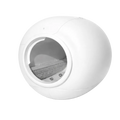
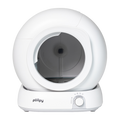
Die eisen samen verklaren waarom veel baasjes van grote rassen uitkomen bij een automatische kattenbak: die houdt de bak na elk bezoek schoon, zonder dat jij dagelijks hoeft te scheppen. De Poopy Nova Pro heeft een ruime, stevige trommel waar een forse Noorse Boskat in past (geschikt voor katten van 1 tot 10 kilo, huishoudens tot 3 katten), pauzeert de reiniging zodra je kat op of in de bak stapt en sluit geurtjes luchtdicht op in het afvalcompartiment. En met 50 dagen proefpoepen ontdek je zonder risico of het bij jouw kat past: went het niet, dan krijg je je geld terug.
Eerst meer weten over hoe zo'n bak werkt, wat hij kost en waar je op let? Lees onze complete gids over automatische kattenbakken. En de vulling? Een dubbele wintervacht sleept makkelijk korrels mee door het huis, dus grovere korrels met sterke klontvorming zijn hier de slimme keuze. Hoe je kiest lees je in de kattenbakvulling-keuzegids.