









What kind of cat litter do you use in an automatic litter box?
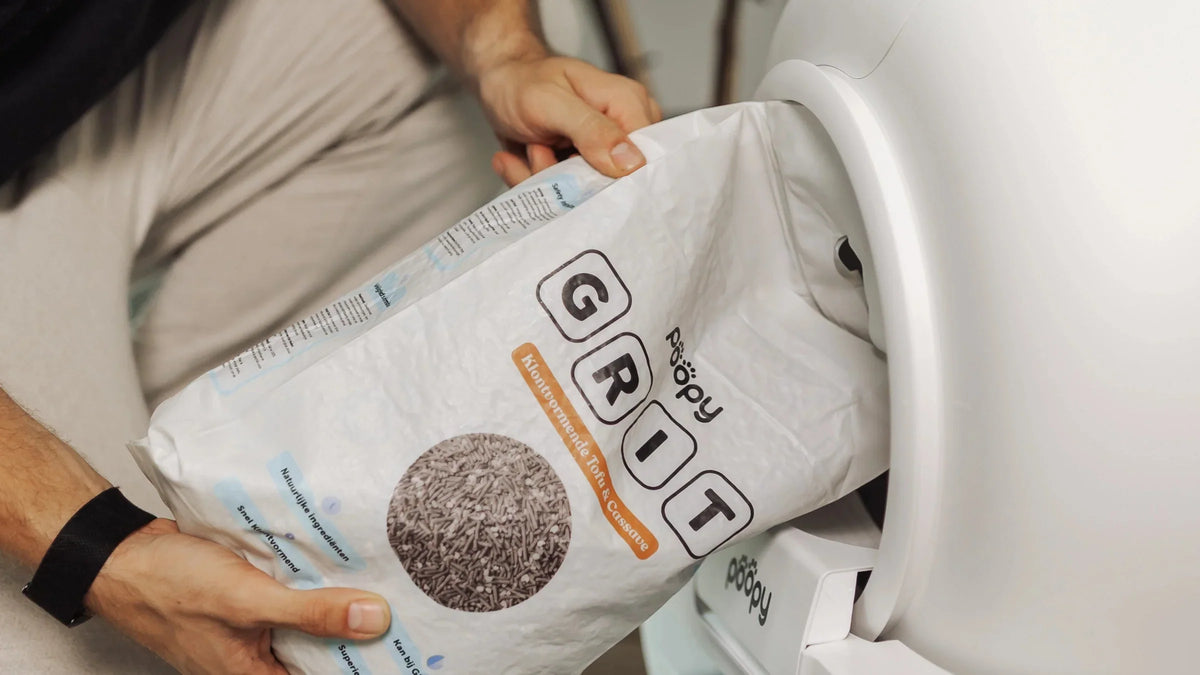
Je automatische kattenbak doet het vieze werk, maar de vulling bepaalt hoe goed dat lukt. De verkeerde vulling betekent klonten die uit elkaar vallen in de zeef, geur die blijft hangen en een afvalbak die sneller vol zit. In deze gids: welke soorten vulling er zijn, welke wel en niet werken in een zelfreinigende bak, wat het per maand kost en hoe je overstapt zonder gedoe met je kat. Zoek je de brede vergelijking van alle soorten vulling, los van de automatische bak? Lees dan onze complete kattenbakvulling-keuzegids.
The only strict requirement: it must form clumps
An automatic litter box works with a sieve: after each use, the drum rotates and sifts the solid waste out of the clean litter. This only works if the urine forms a solid clump that rolls out of the sieve in one piece. If the clump falls apart, wet bits remain in the clean litter, and eventually you’ll just start to smell it.

Zo hoort een klont eruit te zien: stevig en compact, zodat hij in één keer uit de zeef rolt. Alles in deze gids draait om die ene vraag: klontert het goed?
De vier soorten in één oogopslag
| Soort | Klontvorming | Stof | Weight | Automatische bak? |
|---|---|---|---|---|
| Bentoniet (klei) | Zeer sterk | Wisselt per kwaliteit | Zwaar | Ja, de standaard |
| Plantaardig (tofu) | Goed tot zeer goed | Laag | Licht | Ja, mits snel klontend |
| Silica (kristallen) | Geen | Laag | Licht | Nee |
| Hout / papier | Meestal geen | Laag | Licht | Meestal niet |
De vier soorten langs de meetlat
1. Bentonite (clay granules): the clumping champion
Bentoniet is een natuurlijke klei die vocht razendsnel opsluit in een harde klont. Daarom is het wereldwijd de standaard voor automatische kattenbakken. Let wel op de kwaliteit: goedkope bentoniet stuift meer en klontert zwakker, en juist die twee dingen merk je in een zeefbak direct.
2. Plant-based (tofu and other fibers): light and clean
Vulling op basis van tofu- en plantenvezels klontert goed, weegt minder en is een natuurlijke keuze. Veel katten vinden de zachte korrels bovendien prettig aan hun poten, en omdat de basis plantaardig is, is het geen probleem als je kat er bij het poetsen wat van binnenkrijgt. Kies wel een variant die speciaal als snel klontvormend is gemaakt, want daar zit het verschil tussen merken. Alles over deze categorie lees je in tofu-kattenbakvulling: de plantaardige keuze.
3. Silica (crystals): unsuitable
Silica crystals absorb urine without clumping. This works fine in a regular litter box, but it’s useless in a sifting litter box: there’s nothing to sift out. Do not use in an automatic litter box.
4. Wood pellets and paper: usually unsuitable
When wood pellets come into contact with moisture, they break down into sawdust instead of forming a clump. A screen can’t process that either. There are types of wood that do form clumps, but be sure to check carefully whether the clump is firm enough.
Other things to keep in mind
Naast klontkracht maken drie dingen het verschil in de praktijk. Stof: stofarme vulling is beter voor de luchtwegen van je kat en van jou, en houdt de bak en de trommel vanbinnen schoner. Goed om te weten: de Poopy werkt alleen met gewichtssensoren aan de onderkant, dus stof kan de werking nooit verstoren. Bakken die op infraroodsensoren vertrouwen zijn daar gevoeliger voor. Korrelgrootte: hele fijne korrels blijven aan poten plakken en verspreiden zich door huis (tracking). Een kattenbakmat voor de uitgang vangt het laatste restje op. Geurbinding: goede vulling sluit geur op in de klont in plaats van hem te maskeren met parfum, want daar houden katten niet van.
Wat kost kattenbakvulling per maand?
Hier gaan de meeste vergelijkingen mis, want mensen vergelijken zakprijzen in plaats van maandkosten. Goedkope vulling klontert zwakker, waardoor je meer schept en vaker de hele bak ververst: je koopt dus vaker een nieuwe zak. Premium vulling gaat tot 3x langer mee dan supermarkt-grit, waardoor het verschil per maand veel kleiner is dan het verschil op het schap. Reken bij één kat op ongeveer €20 per maand voor premium vulling. Zie het zoals je kattenbak zelf: geen kostenpost maar een investering die zich terugbetaalt in minder sjouwen, minder stof en een huis dat nergens naar ruikt. Wil je de complete rekensom van bak plus vulling plus zakjes, lees dan wat kost een automatische kattenbak per maand.
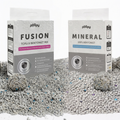
Poopy Two Fillings
We developed our litter for our own automatic litter boxes, but it works in any litter box. There are two varieties based on the same principle: firm clumps, minimal dust.

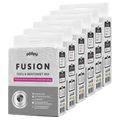
Fusion Grit is onze plantaardige vulling: 70% tofu met actieve koolstof voor directe klontering en geurbinding, versterkt met 29% bentoniet voor extra klontkracht. 99% stofvrij, licht om te tillen en veilig als je kat er bij het poetsen een hapje van binnenkrijgt. 6 zakken (elk 3 kg / 4 liter) kosten €59,95.

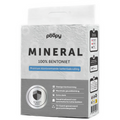
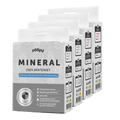
Mineral Grit is de klei-variant: 98% zuivere bentoniet met het Triple Fresh System voor geurcontrole. Maximale klontkracht voor wie het klassieke gevoel van kleikorrels wil. 4 zakken kosten €31,95.
Nooit meer sjouwen of vergeten te bestellen? Met Poopy Essentials komt je vulling automatisch voor €39,95 per levering in plaats van €59,95 los, inclusief 20 afvalzakjes en gratis verzending. Je kiest zelf de frequentie en kunt altijd pauzeren.
Overstappen op andere vulling: het mengschema
Katten zijn gewoontedieren, dus wissel nooit in één keer de complete bak om. Zo gaat het goed:
- Meng half om half: begin met de nieuwe vulling door de huidige.
- Bouw op: verhoog elke paar dagen het aandeel nieuwe vulling.
- Klaar: de meeste katten zijn binnen een week volledig over.
Weigert je kat de bak tijdens het wisselen, ga dan een stap terug in de mengverhouding. Plast je kat ernaast, dan is dat vrijwel altijd een signaal en geen protest; lees waarom plast mijn kat in huis.
How much filling do you use?
Reken bij één kat op ongeveer 2 zakken per maand. Goed om te weten: een automatische bak gebruikt vulling zuiniger dan een gewone bak. Omdat de zeef na elk bezoek alleen de klonten verwijdert, blijft de rest schoon en hoef je niet wekelijks de hele bak om te kiepen. Hoe dat ritme van scheppen, bijvullen en verversen eruitziet, staat in hoe vaak moet je de kattenbak verschonen.
Frequently asked questions
Can I use regular filling from the supermarket?
Ja, zolang hij klontvormend is werkt hij in een automatische bak. De kwaliteit verschilt alleen flink per merk: zwakke klonten en veel stof merk je direct in het resultaat, en doordat je meer verbruikt is het prijsverschil per maand kleiner dan het lijkt.
How much filling should go in the pan?
Vul tot de vullijn van je bak, zo'n 5 centimeter. Te weinig vulling geeft zwakke klonten die aan de bodem plakken. Te veel is zonde: de zeef kan dat overschot niet kwijt, waardoor schoon grit in de afvalzak belandt of over de rand valt.
How often should I completely replace the filling?
Much less often than with a regular litter box, because the soiled litter is removed after each use. Be sure to refill it regularly, and completely replace the litter when you clean the box.
Mag kattenbakvulling door het toilet of bij het gft?
Spoel klonten nooit door het toilet, ook "doorspoelbare" vulling niet: klontvormende korrels zijn gemaakt om uit te zetten en dat is precies wat je in een afvoer niet wilt. Gooi klonten bij het restafval. Voor gft verschillen de regels per gemeente, dus check je lokale afvalwijzer voordat je plantaardige vulling bij het gft doet.
Is kattenbakvulling veilig voor kittens?
Kittens verkennen alles met hun bek, dus voor hen is een plantaardige vulling de veilige keuze: die kan geen kwaad als er wat wordt binnengekregen. Let er bij een automatische bak vooral op dat je kitten zwaar genoeg is; de Poopy is geschikt vanaf 1 kilo, ongeveer 3 maanden.
What is the best litter for an automatic litter box?
A high-quality, fast-clumping litter: bentonite if you’re looking for maximum clumping power, plant-based if you want something light and natural. Silica and wood pellets are out of the question.
Still trying to figure out which litter box to choose? Then read our complete guide to automatic litter boxes or check out our unbiased top 5 picks for 2026.