





















How safe is an automatic litter box for your cat?
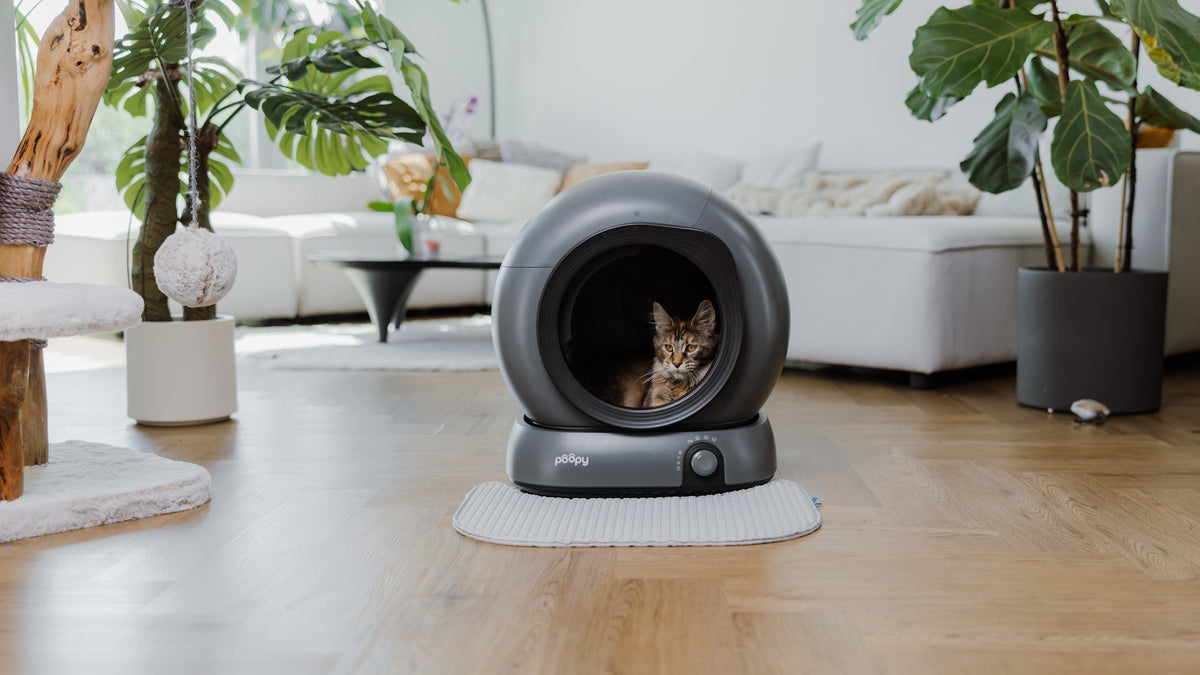
It’s the first question almost everyone asks before buying an automatic litter box: Is it really safe for my cat? And rightly so. There’s a motor running inside a device your cat sits in; that’s a question you should definitely ask. In this article, we’ll give you the honest answer: it depends entirely on how the litter box is designed. We’ll explain where the real risk lies and what you should look out for, no matter which brand you buy.
Where is the real risk?
With most automatic litter boxes, safety depends on software: sensors detect the cat and pause the cleaning cycle. That works—as long as everything is working properly. But with a design that relies solely on sensors, a sensor malfunction can have serious consequences—especially with litter boxes that have a waste drawer underneath the drum or moving parts that a cat could get caught in. That’s the scenario behind the stories you read online.
So the key question when choosing isn't "Does this transmission have sensors?" (every automatic transmission does), but: What happens if the technology fails?
The secret lies in the direction of rotation: X-axis or Y-axis
Automatic litter boxes operate in two different ways, and that difference determines almost everything when it comes to safety:
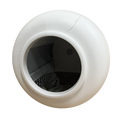
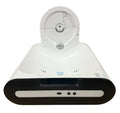
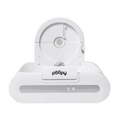
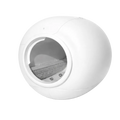
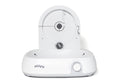
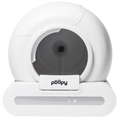
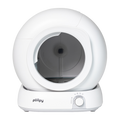
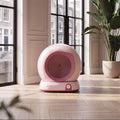
- Rotation around the X-axis (like Poopy): the drum rotates horizontally around its own axis, like a concrete mixer. As a result, the opening remains open throughout the entire cleaning cycle. There is never a moment when the bin closes, and therefore never a moment when a cat can be trapped or pinned.
- Rotation around the Y-axis: the bin tilts vertically, causing the opening to actually close or turn away from the entrance during the cycle. If the detection system fails in such a design while the cat is inside, the cat can become trapped or worse—in the worst-case scenarios, with fatal consequences. These are the horror stories you come across online.
The Banana Test
Hoe reëel dat klemgevaar is, hebben we getest met een banaan. In de video zie je wat er gebeurt wanneer een klemmend onderdeel van een sluitend ontwerp dichtgaat terwijl er iets tussen zit. Stel je in plaats van de banaan een kattenpootje voor, en je begrijpt waarom wij dit soort constructies principieel niet gebruiken.
Then see the difference for yourself: in the video below, the Poopy runs through a full cycle, and the opening stays open the entire time.
Safety through design, not through software
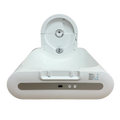
With Poopy , this Poopy the starting point for the entire design. Three physical features ensure your cat’s safety, even if all the electronics were to fail:
- Open entrance, no door or hatch. Your cat can always come and go freely, even during a power outage. Nothing can close with your cat inside.
- There is no waste drawer under the drum. The waste compartment is located on the outside, so there is no space under the bin where a cat could get stuck.
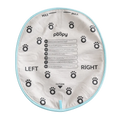
- No pinch points or sharp edges. The drum is seamless on the inside, and the design has no areas where a leg or tail could get caught.
The result: a jam scenario is physically impossible with this design—not because software prevents it, but because there simply isn't enough space for it to occur.
The sensors: the second layer of security

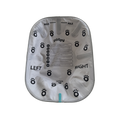
Bovenop het fysieke ontwerp werken gewichtssensoren aan de onderkant van de bak. Die registreren elk bezoek en pauzeren een reinigingscyclus direct zodra je kat op of in de bak stapt; pas als de bak weer vrij is, gaat de cyclus verder. Omdat het gewichtssensoren zijn en geen infraroodsensoren, kan stof of vuil de detectie niet verstoren. En via de app kun je desgewenst een kinderslot en vaste reinigingstijden instellen.
What about kittens?
The sensors detect cats weighing 1 kilo or more, approximately 3 months old. If your kitten is lighter or younger, wait a little longer before using an automatic litter box. On the other hand, kittens often adapt the fastest of all because they don’t have any old habits. Our training guide helps ensure a smooth transition.
The Safety Checklist for Choosing
No matter where you shop, ask these six questions:
- Does the drum rotate around the X-axis (the opening remains open) or around the Y-axis (the hopper closes during the cycle)?
- Can my cat always go in and out freely, even without power? (open design, no flap)
- Where is the waste compartment? (not under the drum)
- Stopt de reiniging direct zodra de kat op of in de bak komt, en hervat hij pas als de bak vrij is?
- What happens in the event of a sensor malfunction: does the design itself provide protection, or is it just the software?
- At what weight does the litter box detect cats, and does that apply to your cat?
In our comprehensive guide to automatic litter boxes, you'll find a complete buying checklist, and in our unbiased Top 5 list for 2026, we compare the most popular models side by side.
Want to see for yourself how it works?
On the "How Poopy " page, you can see the design and how it works in detail. And because trust really only grows once you’ve experienced it at home, you get a 50-day trial: if you don’t like it, send the litter box back and get your money back.
Frequently asked questions
Can my cat get stuck in an automatic litter box?
That depends on the design. With litter boxes that rotate around the Y-axis (and therefore close during the cycle) or have a waste drawer under the drum, that risk exists if the mechanism fails. With an X-axis design that has an open entrance and no drawer under the drum—such as the Poopy—there is simply no space where a cat could get stuck.
What happens during a power outage?
With an open design, there's nothing special about it: your cat can simply go in and out, and as soon as the power comes back on, the litter box resumes functioning. Never choose a litter box that requires electricity for your cat to get out.
Is an automatic litter box safe for kittens?
Starting at about 1 kilo and 3 months old, yes: the weight sensors will reliably detect your kitten. You'll have to wait a little longer before then.
How do I know if my cat trusts the litter box?
A cat that trusts the litter box will simply use it, even during the day when you're around. Give it a few days to two weeks to adjust to the change and follow the transition guide; the trial period will take care of the rest.